


Red raspberries in the sun by wooden fence, credit: Fourmile Farm
An interview with Gary Huber, Forman of Fourmile Farm, Ankeny, IA.
Can you tell us a little about the history of Fourmile Farm and how it all began?
Fourmile Berry Farm is based on a desire by the owners to bring things to life on our 15-acre former farmstead. The farm began in 2020 when the first strawberries and raspberries were planted. More were added over time to arrive at our current inventory of about 700 different kinds of raspberries, 500 strawberry plants, and 240 blueberry plants. We also have smaller numbers of gooseberries, currants, and elderberries.
Where are you located, and what makes your land or growing practices unique?
The farm is in Ankeny on land that is zoned agricultural. As for practices, we aren’t certified organic, but we don’t spray to control insects or weeds. Fertility comes from sheep manure compost from a nearby farm.
What inspired you to start making jams?
Making jams wasn’t initially a goal. Rather, once we began harvesting more berries than could be used by our family, we decided to turn the berries into high quality jams. This led to installing a licensed kitchen on the farm where we make the jams.
What fruits do you use in your jams, and where do they come from?
The berries we use in our jams are from our farm. We currently make jams from our blueberries, strawberries, and red, black and purple raspberries.

Gary with round strawberry bed, credit: Fourmile Farm
Do you have a signature or customer-favorite flavor? What makes it special?
All our jams are special, in part because they come from berries we handpick at peak freshness, but black raspberry jam is our favorite. It has a deep rich color, great flavor, and a smooth texture. Also, black raspberry jam is hard to make because of its large seeds, but we’ve added an additional processing step that extrudes most of the seeds from the jam to create a product you won’t find anywhere.
What sets your jams apart from others on the shelf?
Our jams are made from fruits we grow and harvest from our farm, whereas most of the jams in stores are made from frozen fruits out of major fruit growing areas like Michigan. As well, we use traditional recipes that result in jams that taste amazing. “A party on your tongue” is how one customer described the jams.
Are there any seasonal or limited-batch flavors we should keep an eye out for?
Our farm is a small operation, so supplies of all our jams are limited. The most limited is our royalty purple jams because we have only one 70-foot bed.

Strawberries in green containers, credit: Fourmile Farm
What does the jam-making process look like for you—from harvest to jar?
We harvest, wash and freeze the fruits during the growing season. The frozen fruits are then thawed and turned into jams during the off season. We use standardized recipes we’ve developed for each type of jam, and we make them in 25 jar batches in our Home Food Processing Establishment licensed kitchen. We use a 20-quart steam kettle where ingredients are added in a prescribed order and brought to the appropriate target temperatures. The hot jams are added to jars that have been sterilized in boiling water using a large plastic kitchen picture with an appropriate spout and a funnel on top of each jar. Sterilized lids are then attached, and the jams cool to room temperature before the labels are added. Each batch is also tested for pH and sugar content to ensure these standards are met and we are in compliance with our licensing requirements.
What’s most important to you when it comes to quality and flavor?
The criteria for evaluating jams are color, aroma, taste, consistency, spreadability, and mouthfeel. Each of these attributes is important to the overall quality. We actually had our jams evaluated on these criteria by 20 participants in a shared-use kitchen workshop held in 2025. With 5=good and 1=bad as the rating scale, not one of the six attributes for all four jams had average scores below 4.0. Overall average scores for each type were 4.7 for the purple, red, and black raspberry jams, and 4.9 for the strawberry jam.
What does it mean to you to partner with a community-owned co-op like ours?
Local matters. We need to be able to feed ourselves from local farms using businesses that are locally owned and operated. As well, the co-op business structure has features imbedded in its principles that are unique and superior to other types of grocery stores.
How do you hope customers will enjoy your jams in their everyday meals?
Jams can be enjoyed in many ways. On top of ice cream or brie cheese, on toast or heated muffins, by swirling into yogurt or oatmeal, by mixing into vinaigrettes, or for fillings in baked goods.
What’s your favorite way to enjoy your own jam?
On warmed and buttered muffins with a glass of milk as a snack before bedtime.
If someone is trying your jam for the first time, which flavor should they start with?
The strawberry. It’s more affordable, and it was our highest rated jam.
What’s something people might be surprised to learn about your farm or business?
The farm’s location within Ankeny’s city limits is unusual. It’s an urban fruit farm that wants to do good for its local community.
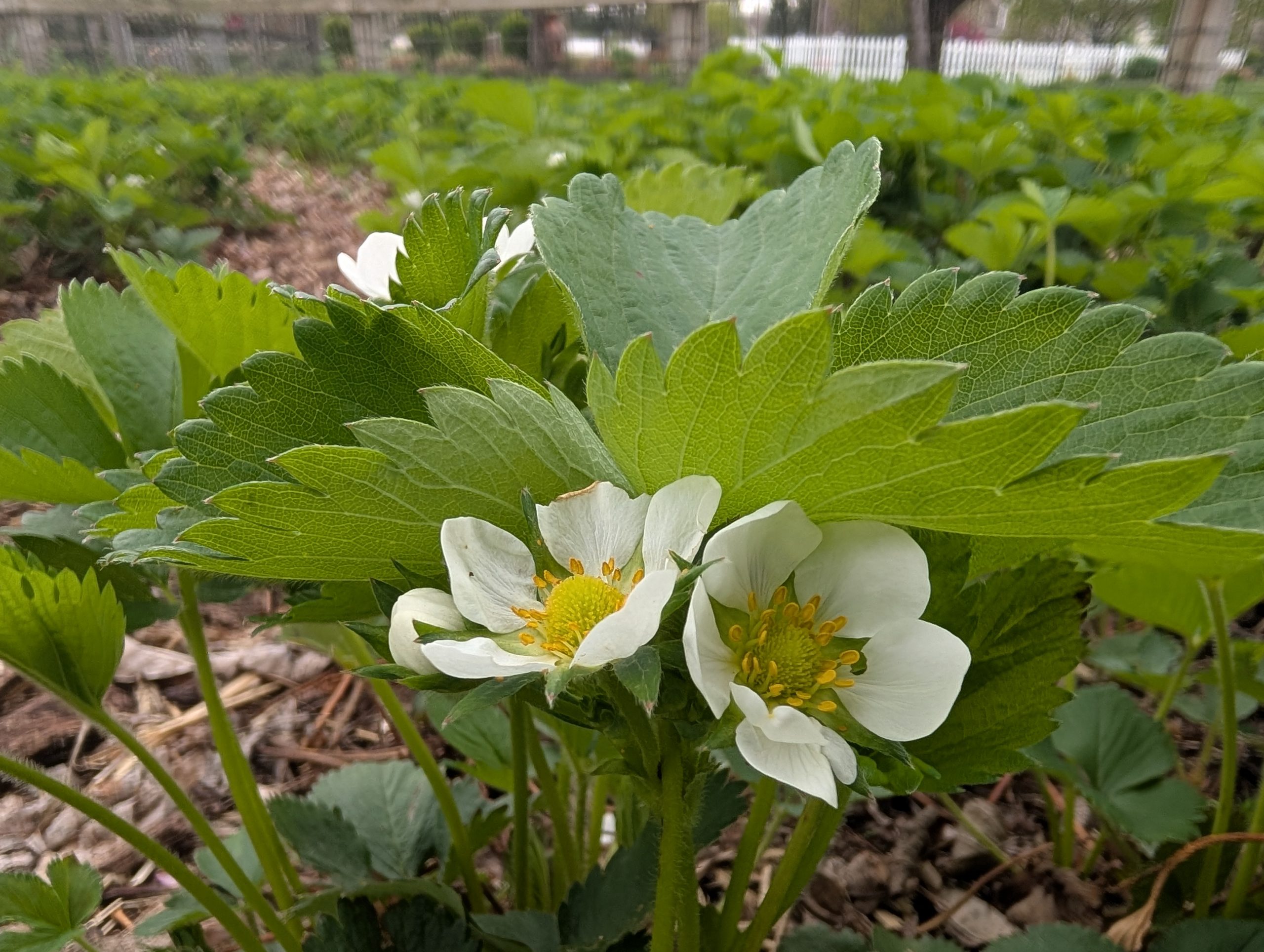
Strawberry blossoms, credit: Fourmile Farm
What’s next for your farm or jam line?
We continue to add fruits to our fields and beds, which is especially important for our strawberry beds as they need to be renewed every few years. As well, last year we lost five 70-foot beds of red raspberries to disease, so we will be putting blueberry plants in those beds in the spring of 2026.
Any upcoming flavors, projects, or goals you’re excited about?
We’ve not had enough blueberries to start selling this kind of jam because our plants are only now beginning to produce good yields. Each year the plants add to their age, more fruit will be available so that we can add this variety to our portfolio.
Thanks so much to Gary and Fourmile Farm for sharing with our community! You can find their jams in the grocery aisle.



Leave A Comment